

What Property Investors Need to Know
Capital gains tax (CGT) remains one of the most discussed policy levers in Australia’s housing and investment landscape. With ongoing debate around housing affordability, government budgets, and tax reform, proposed changes to CGT—particularly around investor concessions—continue to surface. For property owners and investors, understanding how these potential changes could impact long-term wealth is critical.
What Is Capital Gains Tax?
Capital gains tax is the tax applied to the profit made when you sell an asset, including investment property. In Australia, CGT is not a separate tax but forms part of your income tax.
If you’ve held an investment property for more than 12 months, you’re generally eligible for a 50% CGT discount, meaning only half the gain is added to your taxable income.
What Changes Have Been Proposed?
While no sweeping reforms have been legislated at the time of writing, several recurring proposals have been discussed in government and policy circles:
1. Reduction of the CGT Discount
One of the most widely debated changes is reducing the CGT discount from 50% to potentially 25% for individuals. This would effectively increase the taxable portion of any capital gain.
2. Limiting CGT Concessions to New Builds
Some proposals suggest restricting CGT benefits (and negative gearing) to newly constructed properties. The aim is to incentivise new housing supply rather than investment in existing dwellings.
3. Changes to Negative Gearing (Flow-On Effect)
While not directly a CGT change, limiting negative gearing could impact overall investment returns and alter how capital gains are viewed as part of the broader investment strategy.
4. Grandfathering Provisions
Historically, proposed changes have included “grandfathering,” meaning existing investments may continue under current rules, while new purchases are subject to updated policies.
Why Are These Changes Being Considered?
The primary drivers behind proposed CGT reforms include:
- Housing affordability pressures
- Encouraging new housing supply
- Government revenue generation
- Balancing investor and owner-occupier demand
However, critics argue that reducing investor incentives could decrease rental supply and place upward pressure on rents—particularly in tight markets.
What Could This Mean for Property Investors?
If implemented, changes to CGT could:
- Increase the tax payable when selling an investment property
- Shift investor focus toward long-term holding rather than short-term gains
- Encourage investment in new developments over established homes
- Impact overall return on investment calculations
The key takeaway: after-tax outcomes matter more than ever.
Should I Sell or Keep My Investment Property?
This is where decisions become less about headlines and more about individual strategy.
Reasons You Might Consider Selling
- You’re sitting on a strong capital gain and want to lock in profit under current tax settings
- Your property no longer aligns with your strategy (low yield, high maintenance, poor growth outlook)
- Cash flow pressures or changing personal circumstances
- Portfolio rebalancing into higher-performing assets
Reasons You Might Consider Holding
- Long-term capital growth outlook remains strong
- Rental demand is increasing, improving yield over time
- Potential grandfathering of current rules may protect existing investments
- Transaction costs (selling, buying, stamp duty) can outweigh short-term tax concerns
- Time in the market typically outperforms timing the market
A Balanced Approach
Trying to “beat” tax changes often leads to reactive decisions. The better approach is to:
- Review your property’s performance (growth + yield)
- Consider your long-term financial goals
- Factor in tax implications, but don’t let them drive the entire decision
- Seek advice from a qualified accountant or financial adviser
Property remains a long-term asset class. Policy settings will change over time—but well-selected properties in strong locations have historically continued to perform.
Final Thoughts
Proposed capital gains tax changes are worth paying attention to, but they shouldn’t trigger rushed decisions. For most investors, the fundamentals still matter more: location, demand, supply, and long-term growth.
If you’re unsure where your investment stands in today’s market—or how potential policy changes could impact your position—it’s worth getting a clear, up-to-date review of your property’s value and performance.
By Tye Thies - Toowoomba's leading real estate agent
tye@tomoro.com.au
0408 249 666
You might also be interested in

Sep 14, 2026
Your Guide to the Garden City in Bloom Spring in Toowoomba means one thing: the Garden City is about to burst into colour. The Toowoomba Carnival of Flowers 2026 runs from Friday 18 September to Monda
Jul 29, 2026
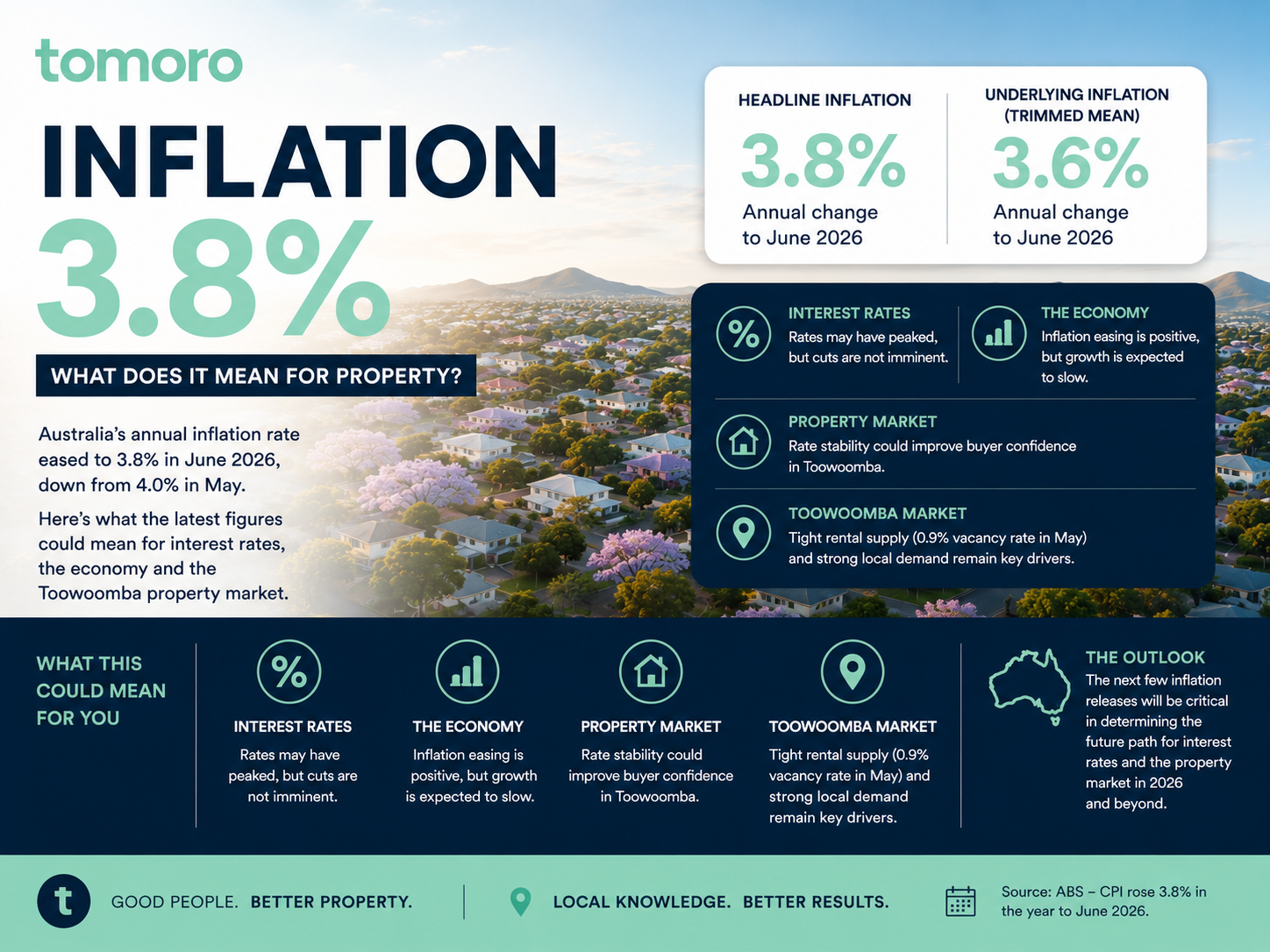
What Could It Mean for Interest Rates and Toowoomba Property? Australia’s latest inflation figures have delivered some encouraging news for households, borrowers and the property market, with annual i