

by Tye Thies
What Happened, What's Next & How to Navigate the Property Market
As another financial year comes to a close, it's the perfect time to reflect on one of the most eventful 12-month periods Australia's property market has experienced in recent years.
From significant tax reforms and record-breaking rental prices to interest rate movements and continued property price growth, homeowners, investors, buyers and sellers have all had to adapt to a rapidly changing landscape.
So, what have we learned from the past financial year, and what could the next 12 months hold?
A Year of Significant Tax Changes
The new financial year has brought some of the biggest tax changes Australians have seen in decades. Adjustments to personal income tax brackets, changes affecting investors, and ongoing government housing initiatives are all influencing purchasing power and investment decisions.
For many households, these changes may increase disposable income, while investors are continuing to assess how taxation, lending policies and long-term property ownership fit within their financial strategies.
Understanding how these reforms affect your individual circumstances is becoming increasingly important, making professional financial and property advice more valuable than ever.
Property Values Continued to Rise
Despite affordability challenges and higher borrowing costs, residential property values remained remarkably resilient throughout the past financial year.
Across many regions, including Toowoomba, demand continued to outweigh available supply, particularly for quality homes in desirable locations.
Several factors helped support this growth:
- Low housing supply
- Strong population growth
- Continued infrastructure investment
- A resilient local economy
- Buyers adjusting to higher interest rates
Rather than waiting for rates to fall dramatically, many buyers accepted the "new normal" and returned to the market, helping sustain price growth.
Record Rental Prices Continue
One of the defining stories of the year has been Australia's rental market.
Vacancy rates have remained historically low across many regional and metropolitan markets, while rental demand has continued to exceed supply.
The result has been record rental prices in many areas.
For investors, stronger rental returns have helped offset higher interest costs. For tenants, however, affordability remains a significant challenge.
Until housing supply improves, rental conditions are expected to remain relatively tight.
Interest Rates Changed the Conversation
Interest rate movements remained one of the biggest influences on buyer confidence.
Higher borrowing costs reduced purchasing power for some buyers, yet they also encouraged many homeowners to carefully review their finances, refinance existing loans and reconsider long-term investment strategies.
Importantly, the market demonstrated that property activity does not stop simply because interest rates rise.
People still buy homes because of life events including:
- Growing families
- Downsizing
- Employment changes
- Lifestyle decisions
- Investment opportunities
These fundamentals continue regardless of where interest rates sit.
What Could Happen Next?
Looking ahead, several themes are likely to shape the coming financial year.
Continued Housing Shortages
Australia still faces a significant housing supply challenge.
Construction costs remain elevated, labour shortages continue, and new housing delivery is struggling to keep pace with population growth.
This imbalance is expected to continue supporting both property values and rental prices.
Interest Rates May Stabilise
While future Reserve Bank decisions remain data-dependent, many economists believe interest rates are now closer to a neutral setting than they were 12 months ago.
Even modest improvements in borrowing conditions could encourage additional buyer activity.
Government Housing Policy Will Continue to Evolve
Federal and state governments continue introducing policies aimed at improving housing affordability and increasing supply.
These initiatives may create opportunities for first-home buyers, investors and developers, while also influencing market dynamics over the coming years.
How to Navigate the Next Financial Year
Regardless of market conditions, successful property decisions usually come back to preparation rather than prediction.
Here are several practical ways to position yourself well.
Buyers
- Understand your borrowing capacity before searching.
- Focus on long-term suitability rather than short-term market noise.
- Be ready to act when the right property becomes available.
Sellers
- Presentation remains one of the strongest drivers of premium sale prices.
- Pricing accurately from the beginning attracts stronger buyer competition.
- Local market knowledge is more valuable than broad national headlines.
Investors
- Review your rental returns and overall portfolio performance.
- Understand the tax implications of any planned purchases or sales.
- Continue monitoring maintenance, compliance requirements and cash flow.
Homeowners
Even if you're not planning to move, it's worth reviewing your property's current value, loan structure and long-term financial goals each year.
Knowing where you stand allows you to make informed decisions when opportunities arise.
Local Knowledge Matters More Than Ever
National headlines provide useful context, but every property market performs differently.
The Toowoomba region has continued to demonstrate resilience through changing economic conditions, supported by strong infrastructure investment, population growth and consistent buyer demand.
Understanding what's happening in your local suburb—not just Australia as a whole—can make a significant difference when buying, selling or investing.
Final Thoughts
The past financial year has shown that property markets continue to adapt through changing economic conditions.
While tax reforms, interest rates and housing affordability will remain key discussion points, strong fundamentals continue to support quality property markets.
Whether you're considering buying your first home, selling your current property, expanding your investment portfolio or simply wanting to understand your options, having trusted advice can help you make confident decisions.
At Tomoro, we're here to help you navigate every stage of your property journey. If you'd like to discuss your property's current value, your investment strategy or what's happening in your local market, we'd love to have a conversation.

You might also be interested in

Sep 14, 2026
Your Guide to the Garden City in Bloom Spring in Toowoomba means one thing: the Garden City is about to burst into colour. The Toowoomba Carnival of Flowers 2026 runs from Friday 18 September to Monda
Jul 29, 2026
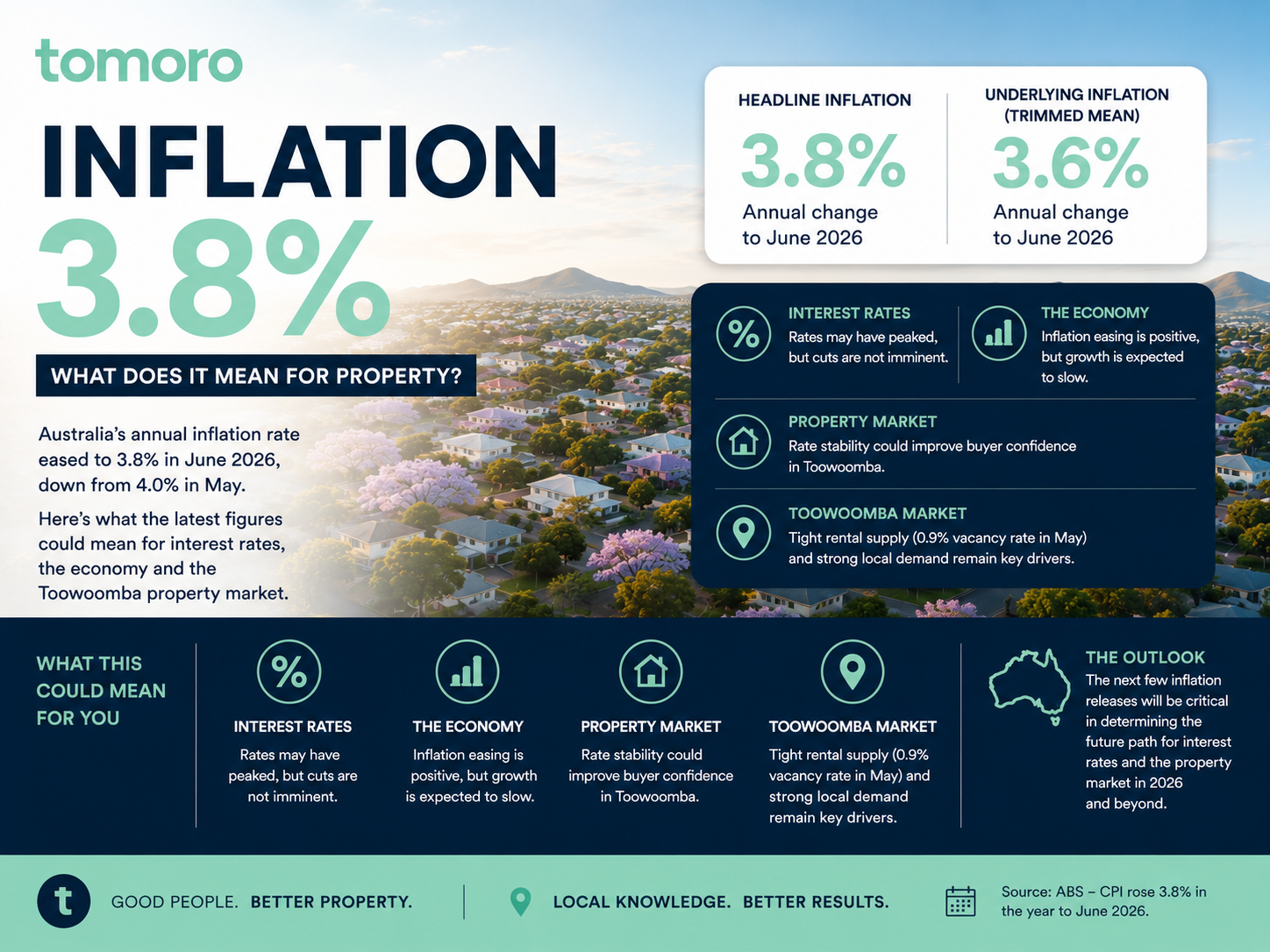
What Could It Mean for Interest Rates and Toowoomba Property? Australia’s latest inflation figures have delivered some encouraging news for households, borrowers and the property market, with annual i