

New AML Rules for Real Estate Agents from 1 July 2026: What Buyers and Sellers Need to Know
Australia's anti-money laundering laws are changing, and from 1 July 2026, real estate agents will be required to comply with new obligations designed to prevent criminals from using property transactions to launder money.
For most genuine buyers and sellers, the impact should be relatively minor. However, you can expect to be asked more questions about your identity, source of funds, and the people involved in a transaction.
If you're planning to buy or sell property after 1 July 2026, here's what you need to know.
Why Are the Rules Changing?
The Australian Government has expanded the Anti-Money Laundering and Counter-Terrorism Financing (AML/CTF) regime to include several professions that were previously outside the system, including real estate agents.
Property transactions can involve large sums of money, making real estate an attractive target for criminals attempting to disguise illegally obtained funds.
The new laws are designed to:
- Reduce money laundering and financial crime.
- Improve transparency in property ownership.
- Align Australia with international anti-money laundering standards.
- Protect the integrity of the Australian property market.
What Will Real Estate Agents Need to Do?
Real estate agencies will be required to:
- Verify the identity of buyers and sellers.
- Conduct customer due diligence.
- Assess and manage money laundering risks.
- Keep records of transactions and identification documents.
- Report suspicious activities to regulators.
- Understand who ultimately controls or benefits from a transaction.
This means agents may need to collect additional information before listing a property or proceeding with a sale.
Questions Sellers May Be Asked
If you're selling a property, your agent may ask:
Identity Verification
- Can you provide photo identification?
- Can you provide proof of your residential address?
- Are you the legal owner of the property?
Ownership Structure
- Is the property owned personally, by a company, trust, or SMSF?
- Who are the directors, trustees, or beneficiaries involved?
- Are there any other parties with an interest in the property?
Source of Ownership
- How was the property originally acquired?
- Was the property inherited, purchased, or transferred?
- Are there any unusual ownership arrangements?
Politically Exposed Person (PEP) Questions
You may be asked whether you or a close associate:
- Holds a prominent government position.
- Is a senior public official.
- Has significant political influence in Australia or overseas.
Questions Buyers May Be Asked
Buyers should expect additional due diligence before contracts become unconditional or before settlement.
Identity Verification
- Can you provide a passport, driver's licence, or other approved identification?
- Can you provide proof of your address?
Source of Funds
One of the most common areas of questioning will relate to where your money is coming from.
You may be asked:
- How are you funding this purchase?
- Are the funds coming from savings, investments, inheritance, or a property sale?
- Can you provide evidence of the source of funds?
- Is the deposit coming from your own account?
Beneficial Ownership
If purchasing through a company, trust, or SMSF, agents may ask:
- Who controls the entity?
- Who are the directors or trustees?
- Who ultimately benefits from the purchase?
International Funds
Additional questions may arise if funds are coming from overseas, including:
- Which country are the funds originating from?
- Which financial institution is involved?
- Can supporting documentation be provided?
What Documents Might Be Requested?
Depending on the circumstances, buyers and sellers may be asked to provide:
- Driver's licence.
- Passport.
- Medicare card or secondary identification.
- Proof of address.
- Company documents.
- Trust deeds.
- SMSF documentation.
- Bank statements.
- Loan approval letters.
- Evidence of inheritance or asset sales.
- Foreign identification documents.
Not every transaction will require every document, but agents will need enough information to satisfy their legal obligations.
Will This Delay Property Transactions?
For most people, the answer is no—provided documentation is supplied promptly.
Much like the introduction of electronic identity verification and Verification of Identity (VOI) requirements for conveyancing, the industry is expected to adapt quickly.
The easiest way to avoid delays is to have identification and supporting documents readily available when buying or selling.
What Happens If Information Cannot Be Provided?
Under the new AML laws, real estate agencies may be unable to proceed with certain transactions if they cannot adequately verify a client's identity or understand the source of funds.
In some situations, agencies may also be legally required to report suspicious activity to AUSTRAC.
Importantly, agencies are generally prohibited from informing clients if a suspicious matter report has been lodged.
What Does This Mean for Property Buyers and Sellers?
The vast majority of Australians are unlikely to experience significant disruption. The biggest change will simply be an increase in identification checks and questions regarding ownership structures and funding sources.
While the process may feel more detailed than in the past, these measures are intended to protect the property market and reduce financial crime across Australia.
If you're planning to buy or sell property after 1 July 2026, expect your real estate agent, conveyancer, lender, and legal representatives to undertake more thorough verification processes than ever before.
The best approach is simple: be prepared, respond promptly to requests for information, and understand that these checks are becoming a standard part of property transactions across Australia.
By Tye Thies

You might also be interested in

Sep 14, 2026
Your Guide to the Garden City in Bloom Spring in Toowoomba means one thing: the Garden City is about to burst into colour. The Toowoomba Carnival of Flowers 2026 runs from Friday 18 September to Monda
Jul 29, 2026
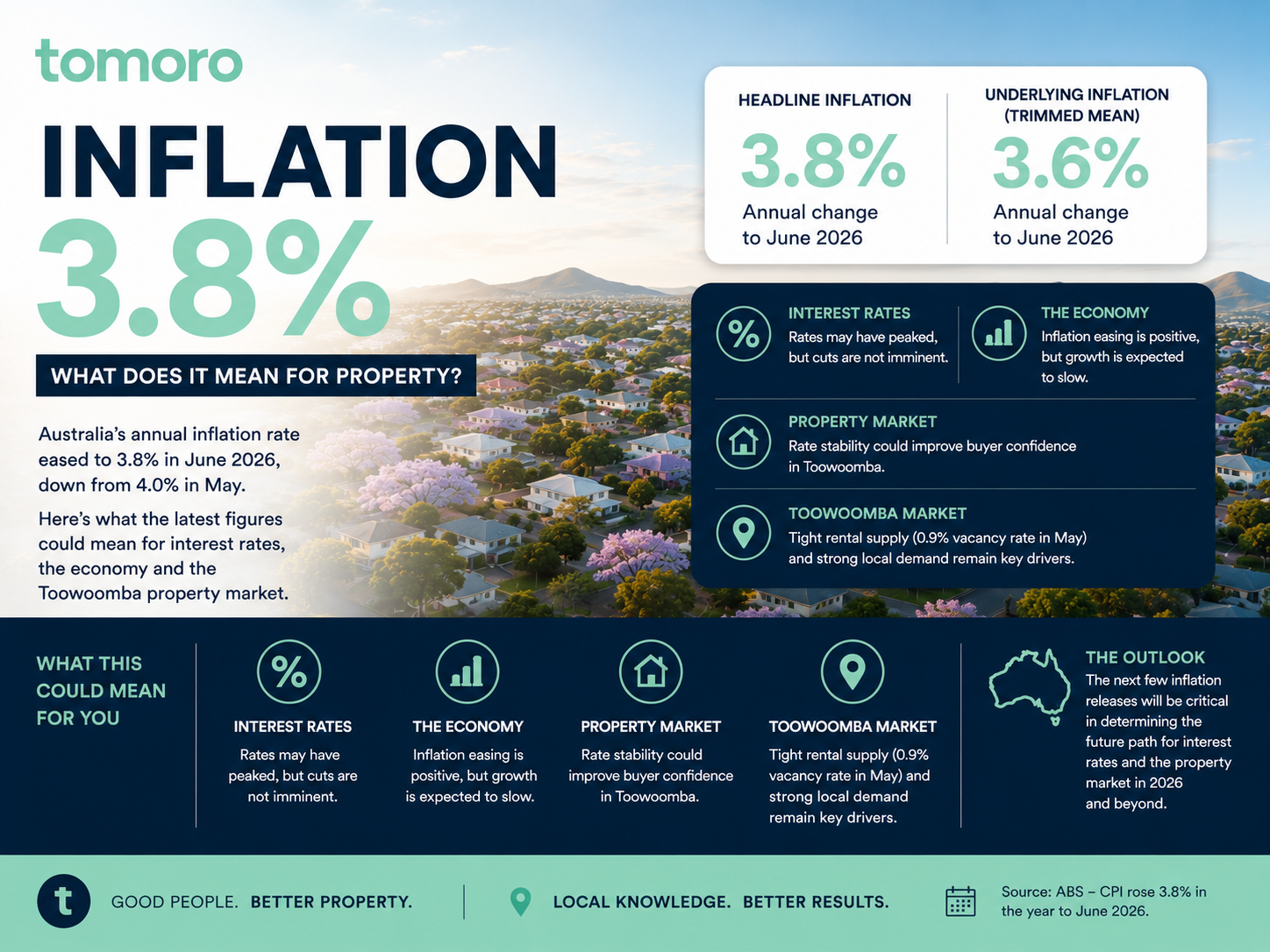
What Could It Mean for Interest Rates and Toowoomba Property? Australia’s latest inflation figures have delivered some encouraging news for households, borrowers and the property market, with annual i